Major Saudi refinery, Iraqi Kurdish and Israeli oil, gas fields shut amid Mideast strikes

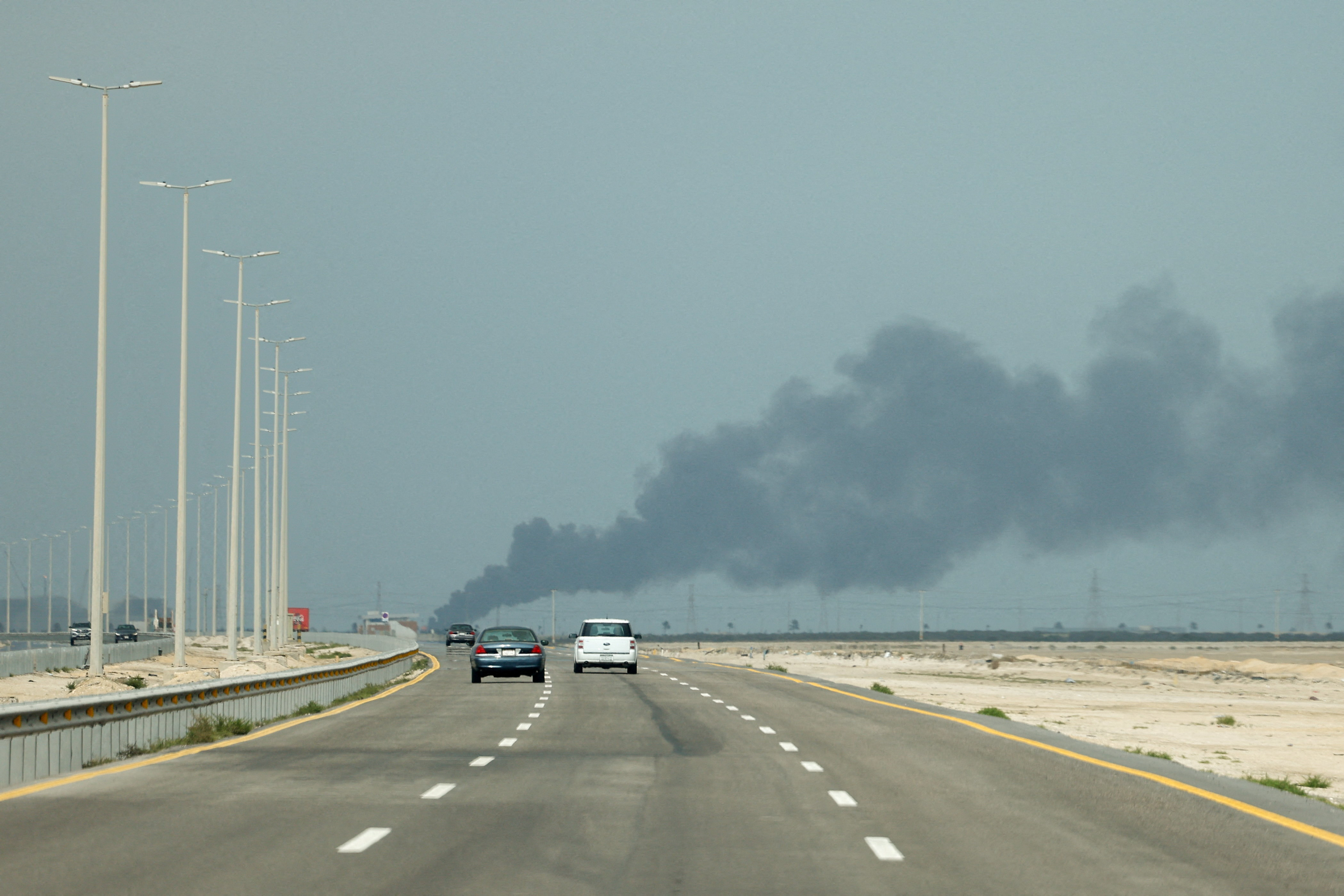
Saudi Arabia shut its biggest domestic oil refinery on Monday after a drone strike, a source said, as Israeli and U.S. strikes and Iranian retaliation triggered precautionary shutdowns of oil and gas facilities across the Middle East.
A wave of attacks on the region stretched into a third day, resulting in the suspension of most oil production in Iraqi Kurdistan and several major Israeli gas fields, throttling exports to Egypt.
Oil prices surged 13% to above $82 a barrel, the highest since January 2025, as the conflict ground shipping to a near halt in the Strait of Hormuz, through which a fifth of global oil supply flows.
State oil giant Saudi Aramco’s 2222.SE 550,000 barrels per day (bpd) Ras Tanura refinery, which was shut as a precautionary measure, is part of an energy complex on the kingdom’s Gulf coast which also serves as a critical export terminal for Saudi crude oil.
In Iraqi Kurdistan, which exported 200,000 barrels of oil per day (bpd) via pipeline to Turkey’s Ceyhan port in February, companies including DNO DNO.OL, Gulf Keystone Petroleum GKP.L, Dana Gas DANA.AD and HKN Energy have stopped output at their fields as a precaution, with no damage reported.
Offshore Israel, the Israeli government instructed Chevron CVX.N to temporarily shut down the giant Leviathan gas field where it is in the process of expanding capacity to around 21 billion cubic metres a year as part of a $35 billion export deal to Egypt. A spokesperson for Chevron, which also operates the Tamar gas field offshore Israel, said its facilities were safe.
Energean ENOG.L shut down its production vessel serving smaller gas fields.
In Iran, explosions were heard on Saturday in Kharg Island, which processes 90% of Iran’s crude exports. It was unclear how the facilities were impacted.
Iran, the third largest producer in the Organization of the Petroleum Exporting Countries, pumps about 4.5% of global oil supplies. Iran’s output is about 3.3 million barrels per day of crude, plus 1.3 million bpd of condensate and other liquids.
Qatar’s government said an energy facility belonging to gas giant Qatar Energy was attacked by two Iranian drones on Monday, with authorities still assessing the damage.
DRONES INTERCEPTED IN SAUDI ARABIA
The situation at Aramco’s Ras Tanura refinery is under control, the source said. Two drones were intercepted at the facility, with debris causing a limited fire, the Saudi defence ministry’s spokesperson said on Al Arabiya TV, adding there were no injuries.
Aramco did not immediately respond to an emailed request for comment.
The supply of petroleum and its derivatives to local markets was not affected, Saudi state news agency SPA said, citing an unnamed official at the energy ministry.
Still, Ras Tanura’s shutdown will likely add to supply anxieties as shipping through the Strait of Hormuz grinds to a near-halt after vessels were attacked around it on Sunday.
ATTACK SEEN AS SIGNIFICANT ESCALATION
“The attack on Saudi Arabia’s Ras Tanura refinery marks a significant escalation, with Gulf energy infrastructure now squarely in Iran’s sights,” said Torbjorn Soltvedt, principal Middle East analyst at risk intelligence firm Verisk Maplecroft.
“The attack is also likely to move Saudi Arabia and neighbouring Gulf states closer to joining U.S. and Israeli military operations against Iran.”
Saudi Arabia’s heavily fortified energy facilities have been targeted previously, most notably in September 2019 when drone and missile attacks on the Abqaiq and Khurais plants temporarily knocked out more than half of the kingdom’s crude production.
Ras Tanura was attacked by Yemen’s Iran-aligned Houthis in 2021.