US allies said they had no immediate plans to send ships to unblock the Strait of Hormuz, rebuffing a request by President Donald Trump for military support to keep the vital waterway open.
Trump called on nations to help police the strait after Iran responded to US-Israeli attacks by using drones, missiles and mines to effectively close the strategic channel off its shores for tankers transporting a fifth of global oil supply.
Most Nato countries, several of whom have been at the sharp end of criticism from Trump in recent months, are usually wary of angering the White House but are now signalling reluctance to become embroiled in the conflict with Tehran.
“What does (…) Donald Trump expect a handful or two handfuls of European frigates to do in the Strait of Hormuz that the powerful US Navy cannot do?” German Defence Minister Boris Pistorius said in Berlin on Monday, as he downplayed threats by Trump that failing to come to Washington’s aid could have consequences for the Nato alliance.
“This is not our war, we have not started it,” he added.
The conflict has nothing to do with Nato and Germany has no plans to be drawn into it, government spokesperson Stefan Kornelius said.
“Neither the United States nor Israel consulted us before the war, and… Washington explicitly stated at the outset of the war that European assistance was neither necessary nor desired,” the spokesperson said.
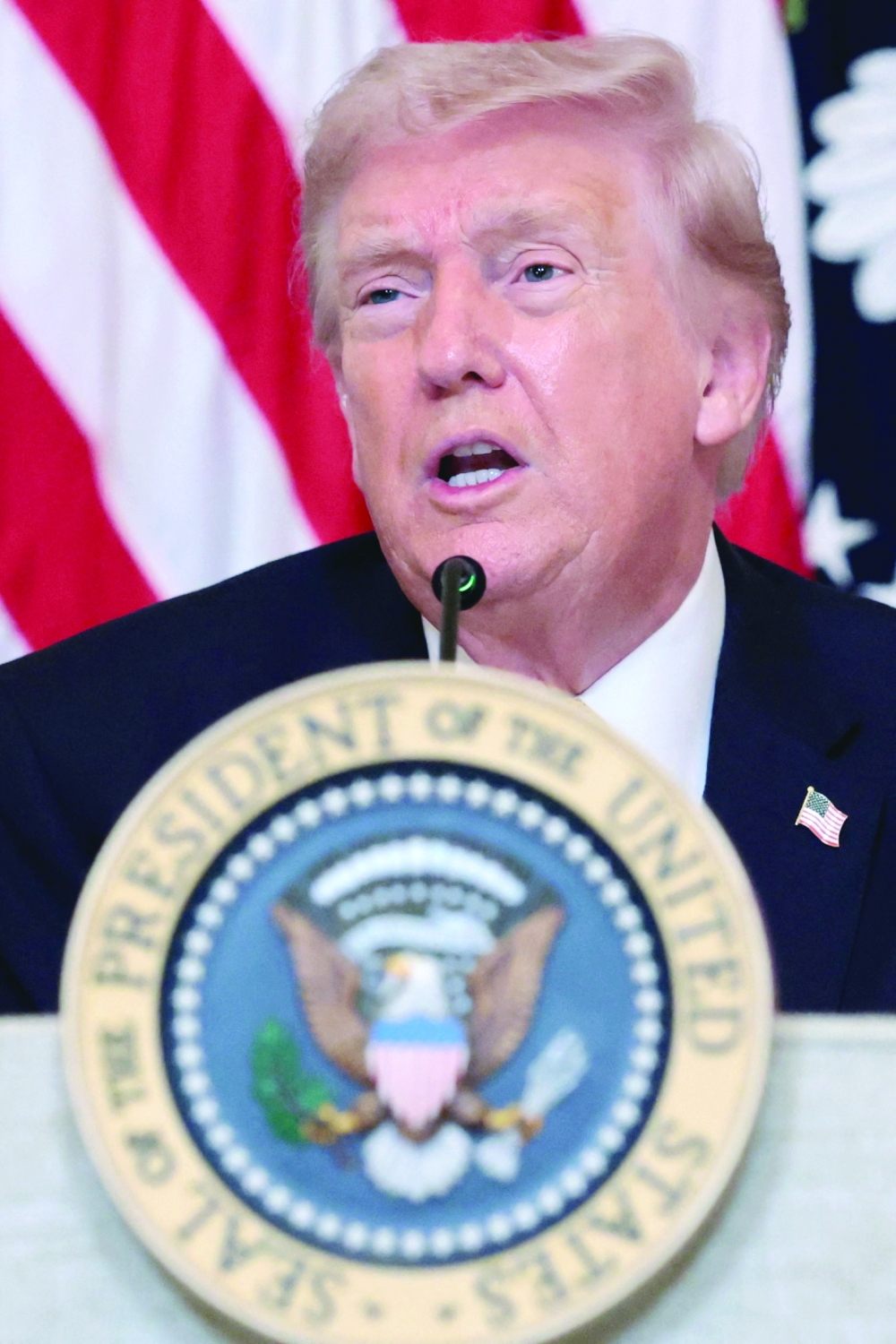
US President Donald Trump speaks during a lunch with the Kennedy Center board members in the East Room of the White House in Washington, DC, on Monday. – Reuters
Still, some allies signalled a cautious willingness to help.
EU foreign policy chief Kaja Kallas said the bloc is in talks with the United Nations about replicating a deal that allows for grain to be exported out of Ukraine during its war with Russia.
The EU is also discussing whether it could change the mandate of its Middle East naval mission, Aspides, which currently protects ships in the Red Sea from attacks by Yemen’s Ansar Allah group, to include the Strait of Hormuz, Kallas said.
But Greece, which leads the Aspides mission, will limit its participation in the Middle East to the Red Sea, said government spokesman Pavlos Marinakis. China is talking with all sides about the strait as it seeks to de-escalate the conflict, its foreign ministry said on Monday.
Britain will work with allies on a collective plan to secure freedom of navigation through the strait, Prime Minister Keir Starmer said, while acknowledging that it wouldn’t be easy and reiterating the UK would not be drawn into a wider war. The UK has autonomous mine-hunting systems that could be used, Starmer said.
Denmark said the EU should work to reopen the strait even if it didn’t agree with the war.
“Even if we don’t like what’s going on, I think it’s wise to keep an open mind on whether Europe… in some way can contribute, but with a view towards de-escalation,” Danish Foreign Minister Lars Lokke Rasmussen said. SEE ALSO P6 & 7