Josephine review: Beth de Araújo’s harrowing drama of lost innocence is an absolute triumph

Josephine movie review
Cast: Mason Reeves, Gemma Chan, Channing Tatum, Philip Ettinger
Director: Beth de Araújo
Rating: ★★★★★
A horrific crime happens in the first ten minutes of Josephine, the sophomore feature from Beth de Araújo, which premiered at the Sundance Film Festival. 8-year-old Josephine (Mason Reeves in her acting debut). During her routine soccer run at San Francisco’s Golden Gate Park with her father Damien (played by Channing Tatum), she accidentally witnesses a sexual assault. A man rapes a jogger outside a public bathroom. As it turns out, Josephine is the sole eyewitness to this crime, and the film then follows her perspective as she grapples with what she saw and what it really means.
The premise
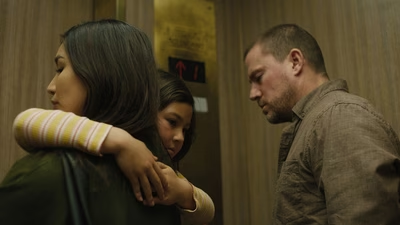
Nothing can truly prepare you for the gut punch Josephine delivers, which then offers a space for healing and conversation around a difficult subject matter that is both astute and sensitive. Gemma Chan plays Josephine’s mother, Claire, who is keen to take her to a psychologist to discuss everything that happened in the park. But even before that happens, Josephine has already googled what rape means and has started to show concerning signs of distress at school.
At home, Josephine is haunted by the presence of the perpetrator. His face is ever-present, like a ghost which sits in the room with her. Damien and Claire try their best to unease the situation, but the shift has already occurred, and the most they can do is make Josephine understand that not everyone means harm. Josephine asks questions; she wants to know more.
What works
Working with cinematographer Greta Zozula, De Araújo takes a daring leap and tells the lingering effect of witnessing this act of violence entirely from the child’s eyes. Some of the sequences are constructed remarkably, such as the one at the dinner table, where the lawyer brings important news about the case. The camera revolves as Josephine comes and plays, even as the ghost in the room sits and watches over. Then there is the montage, which harmonises the conflicts, fears and struggles to breathtaking effect.
Araújo’s mis-en-scene is atmospheric and nail-bitingly intense. The visual language is expansive yet intimate, never too stylised to lose the emotional intrigue at the centre. Araújo conjures an authentic portrait of lost innocence, inviting the viewer to stay with Josephine from the beginning and placing the responsibility on them to patiently observe and empathise with this child till the very end.
Final thoughts
An awful lot is asked from child actor Mason Reeves in the titular role, and on top of that, the film practically rests on her face for the most part. It is a complex and incredibly assured performance to behold, full of raw emotional force, where Reeves’ face serves as a blank canvas for a hundred little micro-aggressions to play out. She begins to respond and challenge what is said to her, leading to a brutal clapback at a crucial scene later on. Channing Tatum is also rock-solid as the father who wants to do the right thing, even when it doesn’t always translate for the best. It is his best performance to date. Gemma Chan brings the right amount of delicacy to the role, reminding her daughter what is best for her.
Josephine is a tough film; it wants to ask the tough questions, the ones that will make everyone in the room uncomfortable. It leaves a devastating, soul-shaking impact. In a world where rape culture is at an all-time high, how do we protect our children? What hope can be offered to them in an unfair world filled with violence and apathy? De Araújo has made a blistering, gripping film that demands unblinking attention. Josephine is a stone-cold triumph, and one of the year’s first great films.
Santanu Das is covering the Sundance Film Festival as an accredited member of the press.