Under the cover of darkness 67 million years ago, a dog-sized dinosaur crept up to the nest of a bigger, unsuspecting contemporary. Its goal: to snatch a large egg.
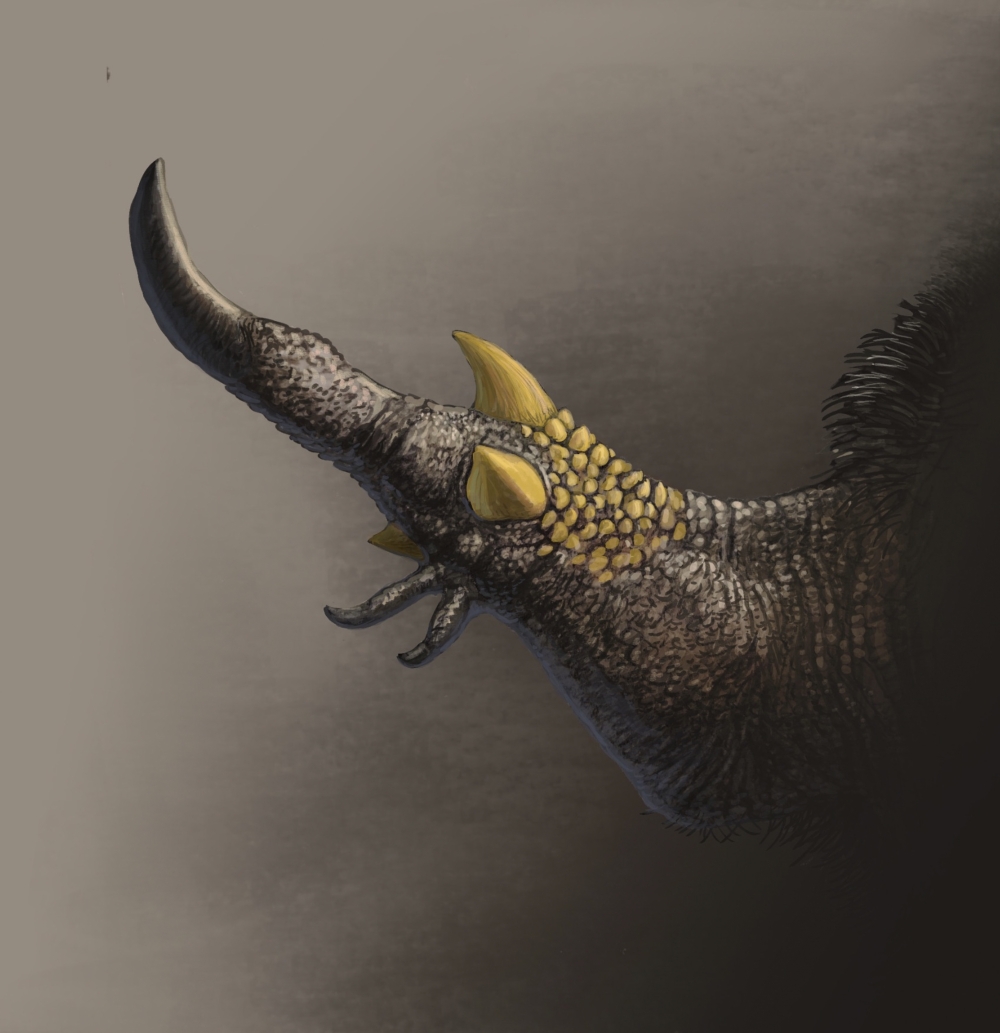
The tiny thief had a handy hack to get to that meal: a multitooled forelimb comprising a giant claw, two side digits and a set of spikes that were ideal for clutching the smooth surface of an egg.
Researchers described this bizarre hand, and the dinosaur it belonged to, in December in The Proceedings of the Zoological Institute of the Russian Academy of Sciences. The team named the species Manipulonyx reshetovi.
The spike-covered hand of Manipulonyx (or “manipulating claw”) turned heads.
“I’ve honestly never been more flabbergasted by any dinosaur fossil,” said Stephen Brusatte, a paleontologist at the University of Edinburgh who was not involved in the study. At first glance, he wondered if it could be “some kind of lobster larvae or starfish,” he said.
A Russian paleontologist unearthed a fragmentary skeleton of the animal in 1979 in the Gobi Desert in Mongolia. The area’s rocks date back to the Late Cretaceous period, some 67 million years ago, when this region was a swampy river delta home to diverse dinosaurs, including armored ankylosaurs, dome-headed pachycephalosaurs, and the Tyrannosaurus rex cousin Tarbosaurus.
Scurrying underfoot were Manipulonyx, which belonged to a family of diminutive dinosaurs known as alvarezsaurids. These animals possessed tiny forearms that ended in one large digit with a hook-like claw. The other fingers were much smaller. That led some scientists to mistake the dinosaurs for flightless birds.
How Alvarezsaurids used their peculiar paws has incited debate. Some scientists think they dug up insects like modern anteaters. Others have argued that the long-legged dinosaurs could not reach the ground because of their short arms and instead ate eggs. — JACK TAMISIEA
This article originally appeared in The New York Times.