Thailand says Cambodia clash is also a war on scammers

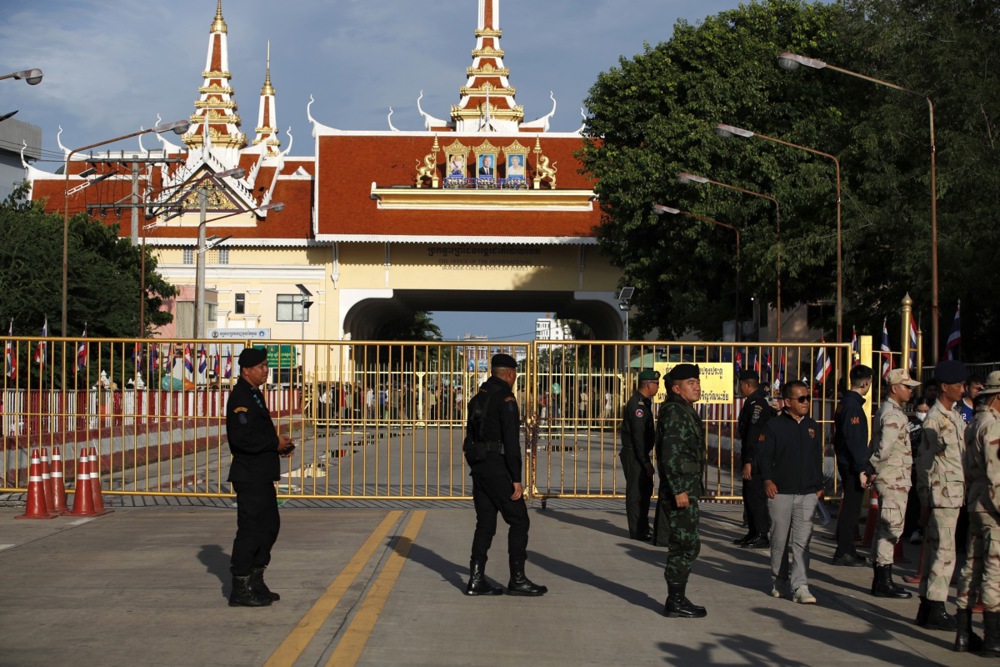
Before the border clashes erupted, Thailand and Cambodia jointly dismantled a scam centre in Poipet that housed hundreds of trafficked foreign workers. (EPA Images pic)
BANGKOK: Thailand’s army has recast its deadly clash with Cambodia as a battle against scam centres, adding a new motive for bombing runs across the border that it says are aimed at rooting out cybercriminals.
Calling the strikes a “war against the scam army,” a military division involved in the border fight said this week it’s on the frontline against the global threat of transnational crime syndicates, which operate across neighbouring Cambodia, Laos and Myanmar.
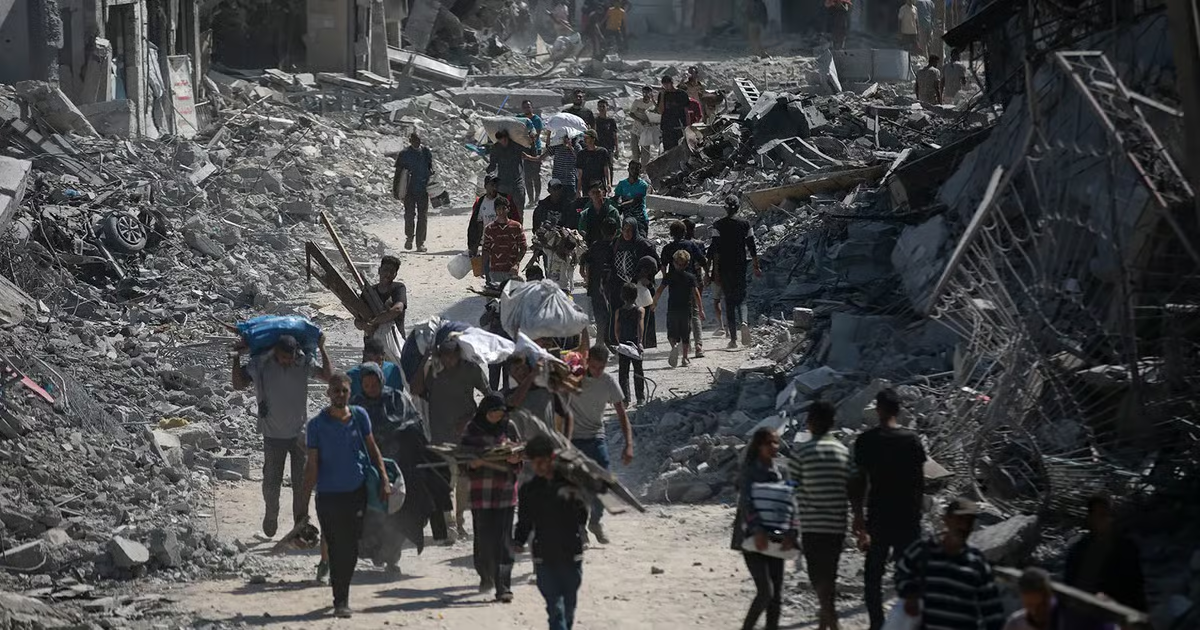
Bangkok’s new tone draws together two simmering crises in Southeast Asia: the border war between the neighbours that has killed dozens and displaced half a million people and a sprawling scam ecosystem that has swindled billions of dollars primarily in so-called pig-butchering and call-centre schemes.
Thailand has been used as a transit hub for trafficked victims, who are either coerced or smuggled over the border into neighbouring countries and forced to carry out online fraud.
The framing also shows that Bangkok is seeking to align itself with both Washington and Beijing, which have pushed separately for Southeast Asian nations to crack down on the scam operations that have targeted both American and Chinese citizens.
In two statements this week, Thailand’s second army area command, in charge of fighting in four of seven border provinces, said some of the targets the Thai military has hit in Cambodia this month were scam compounds used by Cambodian troops. It had earlier focused only on military targets.
Thailand has been “cutting logistical and operational lifelines” and “dismantling transnational criminal support structures,” the command said in a statement Wednesday.
“The true adversary is the transnational criminal networks and power structures that sustain illegal interests through violence,” the command added.
In a separate statement yesterday, the command said Thai forces have neutralised at least six scam-related facilities – which it also refers to as casinos – including two sites that had been previously sanctioned by the US government.
Trump intervention
US President Donald Trump has taken a keen interest in the border fight between Southeast Asian neighbours that erupted earlier this year – threatening both with trade restrictions in July to stop the fighting then overseeing a peace accord in October.
Trump said both leaders pledged to stop renewed fighting after he spoke with them at the weekend.
However, subsequent Thai army statements this week imply the US administration has given Bangkok tacit approval to continue its strikes.
“This explains why many countries, despite calling for a ‘ceasefire,’ have taken no concrete action against Thailand, including the US, which seemed to exercise a polite caution as a supporter of peace,” the army unit said.
“US secretary of state Marco Rubio expressed Washington’s concern over the fighting in a phone call with foreign minister Sihasak Phuangketkeow,” the state department said in a statement.
China mediation
“Beijing has also sought to calm the situation. Deng Xijun, special envoy for Asian affairs, traveled to Cambodia and Thailand yesterday to conduct mediation,” the foreign ministry said.
Top diplomat Wang Yi was also briefed by envoys from Thailand and Cambodia.
“China closely follows the ongoing border conflict between the two countries,” the foreign ministry said in a statement.
“Through its own way, China has been working actively for deescalation,” the ministry said.
Thailand has deployed F-16 and Gripen fighter jets to bomb buildings and bridges used by Cambodia’s military since the border conflict flared up again on Dec 7.
Thailand has said those targets have included “deserted” casinos that housed drone command centres, weapon depots, or troops and snipers.
Yesterday, Cambodia’s defense ministry said Thailand used F-16s to drop two bombs in Poipet, a casino town known for housing cybercrime operations. It didn’t say if any casinos have been hit.
The Thai air force said it was targeting rocket depots and Richa Suksuwanan, deputy spokesman of the Royal Thai Army, told a news briefing yesterday that all targets have been verified as military targets.
“The attacks were not solely focused on casinos and scammers.
“Every target identified was clearly being used as a military base, frequently including drone command centres and weapons depots,” Suksuwanan said.
Scam crackdown
Since the beginning of the year, Thailand has ramped up its crackdowns on the scam networks operating out of its Southeast Asian neighbours, which Chinese President Xi Jinping has publicly supported.
The billion-dollar cyberscam operations have been expanding across the region for years and are often run by Chinese nationals who fled in 2020 following a domestic crackdown.
The criminals have trafficked hundreds of thousands of victims from as many as 56 origin countries to work in the scam compounds, according to a UN report.
Last month, Thailand handed over a Chinese-born, naturalised Cambodian citizen alleged to be a casino kingpin and wanted by Beijing.
In February, Thai authorities repatriated several Chinese nationals who had worked in fraud operations in Myanmar.
The Thai military’s actions to target Cambodian casinos came after a series of measures earlier this year to hurt the illicit economy.
Thailand also halted exports of goods to Cambodia including fuel that it said would be used to abet transnational criminal activities and barred Thais from traveling to Poipet for work.
The measures followed similar efforts when Thailand cut off electricity, internet access and fuel supplies to some areas in Myanmar suspected of housing cyber scam operations.
In February, before the border clashes erupted, Thailand and Cambodia had jointly dismantled a scam centre that housed hundreds of trafficked foreign workers in Poipet.
The Thai army also said in a statement that during a visit Wednesday by China’s vice minister of public security, Liu Zhongyi, Chinese authorities said that the Cambodian government has “connections and shared interests” with some of the scam operations.
The government of Hun Manet in Phnom Penh has denied having such relationships.
China’s foreign affairs ministry didn’t immediately respond to requests for comment on the Thai army’s statement about Liu.