Trump questions Pahlavi’s ability to garner support in Iran, blames Zelenskiy for Ukraine stalemate

U.S. President Donald Trump said on Wednesday that Iranian opposition figure Reza Pahlavi “seems very nice” but expressed uncertainty over whether Pahlavi would be able to muster support within Iran to eventually take over.
In an exclusive Reuters interview in the Oval Office, Trump said there is a chance Iran’s clerical government could collapse, blamed Ukraine President Volodymyr Zelenskiy for the stalemate in negotiations with Russia over the war in Ukraine, and dismissed Republican criticism of a Justice Department probe of Federal Reserve Chairman Jerome Powell.
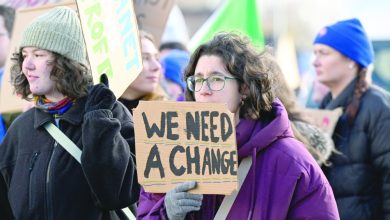
Trump has repeatedly threatened to intervene in support of protesters in Iran, where thousands of people have been reported killed in a crackdown on the unrest against clerical rule. But he was reluctant on Wednesday to lend his full support to Pahlavi, the son of the late shah of Iran, who was ousted from power in 1979.
“He seems very nice, but I don’t know how he’d play within his own country,” Trump said. “And we really aren’t up to that point yet.
“I don’t know whether or not his country would accept his leadership, and certainly if they would, that would be fine with me.”
Trump’s comments went further in questioning Pahlavi’s ability to lead Iran after saying last week that he had no plans to meet with him.
The U.S.-based Pahlavi, 65, has lived outside Iran since before his father was toppled in the 1979 Islamic Revolution and has become a prominent voice in the protests. Iran’s opposition is fragmented among rival groups and ideological factions – including the monarchists who back Pahlavi – and appears to have little organized presence inside the Islamic Republic.
Trump said it is possible the government in Tehran could fall due to the protests but that in truth “any regime can fail.”
“Whether or not it falls or not, it’s going to be an interesting period of time,” he said.
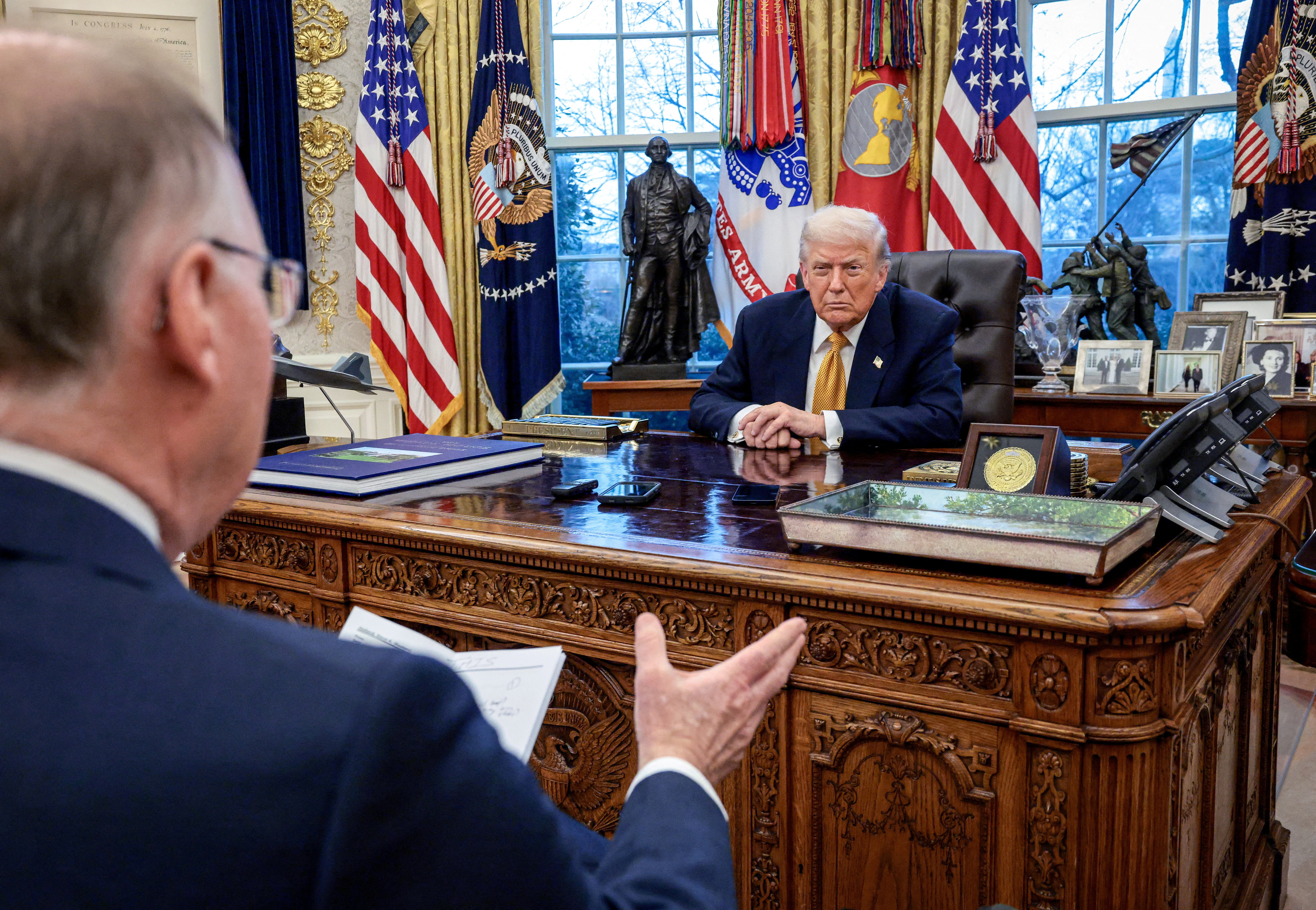
Trump, who is closing out the first year of his second term in office, sat behind his massive Resolute Desk and sipped a Diet Coke during the 30-minute interview. At one point, he held up a thick binder of papers he said contained his achievements since being sworn into office on January 20, 2025.
Five takeaways from interview
TRUMP: I DO IT MY WAY
Trump repeatedly dismissed concerns by the public, business leaders and even his fellow Republicans on issues ranging from the future of Greenland and the criminal investigation into Federal Reserve Chairman Jerome Powell, to the state of the economy.
When told that a Reuters/Ipsos poll found tepid support among Americans for taking control of Greenland, Trump called the poll “fake.”
“I don’t care,” he responded when asked about the pushback by some Senate Republicans against the investigation into Powell. “I don’t care,” he said again, when reminded of JPMorgan Chase CEO Jamie Dimon’s concerns that White House interference in the Fed could harm the economy.
When asked about Americans’ worries about high prices, Trump reiterated that the economy was the strongest “in history” and said he had to do a better job of promoting his achievements. (He referred to a specially prepared thick binder that listed his accomplishments in office.)
The president suggested that he follows his own compass. “A lot of times, you can’t convince a voter,” he said. “You have to just do what’s right. And then a lot of the things I did were not really politically popular. They turned out to be when it worked out so well.”
SECOND THOUGHTS ON IRAN ATTACK?
Earlier in the day, Trump told reporters he believed the crackdown on protesters in Iran was easing, although he declined to cite his source for the information. It remained unclear whether he was still considering ordering a U.S. military strike on the country.
Despite his stream of threats toward the Iranian regime, Trump was noncommittal in the interview about what he wants to see happen in Iran, refusing to call for the ouster of the country’s rulers. He also declined to offer support to the exiled crown prince of Iran, Reza Pahlavi, as a potential future leader.
“I don’t know how he’d play within his own country, and we really aren’t up to that point yet,” Trump said. “We have to play it day by day.”
PEACE IS HARD FOR GAZA AND UKRAINE
Trump discussed two of his signature peace initiatives: the ceasefire in Gaza and his attempts to end Russia’s war in Ukraine. Both efforts have hit rough patches.
Despite his claim that he had brought peace to the Middle East, Trump conceded that Hamas had still not disarmed – a condition of the ceasefire agreement – and it was unclear whether they would. “They were born with a gun in the hand,” he said. “So, we’re gonna have to find out whether or not we’re gonna be able to get it done.”
With regard to Ukraine, Trump again suggested that Russian President Vladimir Putin was ready to strike a deal. Asked directly what the hold-up was, Trump answered: “Zelenskiy,” referring to Ukrainian President Volodymyr Zelenskiy, who has maintained his country won’t seek peace at any cost.
BACKING ICE
Trump appeared to express some sympathy for the death of Renee Nicole Good, after an ICE agent shot and killed her last week in Minneapolis, calling it “a very unfortunate incident.” Trump’s homeland security secretary, Kristi Noem, labeled Good a domestic terrorist.
But even so, he made clear he was standing behind his choice to send militarized officers into American cities.
“I know that it was a tough situation to be in. There was very little respect shown to the police, in this case, the ICE officers,” Trump said.
He said he would continue sending armed agents into cities, claiming that his efforts had taken “thousands of murderers out of our country.” There is no evidence to support that assertion.
MANAGING MIDTERM EXPECTATIONS
The president expressed frustration that his Republican Party could lose control of the U.S. House of Representatives or the Senate in this year’s midterm elections, citing historical trends that have seen the party in power lose seats in the second year of a presidency.
“It’s some deep psychological thing, but when you win the presidency, you don’t win the midterms,” Trump said. He boasted that he had accomplished so much that “when you think of it, we shouldn’t even have an election.”
But he sought to manage expectations for Republicans in November’s congressional midterm elections, noting that the party in power frequently loses seats two years after a presidential election.
“When you win the presidency, you don’t win the midterms,” he said. “But we’re going to try very hard to win the midterms.”
‘ZELENSKIY’ MAIN IMPEDIMENT TO REACHING DEAL
Trump, who has struggled throughout his presidency to end Russia’s war in Ukraine despite campaign boasts that he could end it in a day, said Zelenskiy is the main impediment to resolving the four-year-old war.
Trump has frequently criticized both Russian President Vladimir Putin and Zelenskiy but seemed more downbeat once again on the Ukrainian president.
Trump said Putin is “ready to make a deal.” Asked what the hold up is, Trump said simply: “Zelenskiy.”
“We have to get President Zelenskiy to go along with it,” he said.
REPUBLICAN LAWMAKERS ‘SHOULD BE LOYAL’
Trump dismissed Senate Republicans who have vowed to block his Fed nominees over concerns that Trump’s Justice Department is interfering with the central bank’s traditional independence with its probe into Powell.
“I don’t care. There’s nothing to say. They should be loyal,” he said of his party’s lawmakers.
Trump also rejected criticism from JPMorgan CEO Jamie Dimon that Trump’s meddling into the Fed could spike inflation.
“I don’t care what he says,” Trump said.
Trump is to meet on Thursday with Venezuelan opposition leader Maria Corina Machado at the White House, their first in-person meeting since Trump directed the arrest of Venezuelan President Nicolas Maduro and seized control of the country earlier this month.
“She’s a very nice woman,” Trump said of Machado. “I’ve seen her on television. I think we’re just going to talk basics.”
Machado won the Nobel Peace Prize last year and dedicated it to Trump. She has offered to give him her prize, but the Nobel Committee said the peace prize cannot be transferred.
He praised the acting president of Venezuela, Delcy Rodriguez, who was vice president to Maduro when he was ousted. Trump said he had a “fascinating talk” with Rodriguez earlier on Wednesday and “she’s been very good to deal with.”
Trump frequently extolled the strength of the U.S. economy during the interview despite lingering worries among Americans about prices. He said he will carry that message with him next week to the World Economic Forum in Davos, Switzerland, where he will stress “how great our economy is, how strong our job numbers are, how good we’re doing.”
White House press secretary Karoline Leavitt told Reuters that Trump will have bilateral meetings with the leaders of Switzerland, Poland and Egypt while at the Davos event.