At least 400 people were killed and 250 injured in an air strike by Pakistan on a drug rehabilitation hospital in Kabul, a spokesman of the Afghan Taliban government said on Tuesday, a sharp escalation in the conflict between the neighbours.
Pakistan rejected the claim as false and misleading and said it “precisely targeted military installations and terrorist support infrastructure” on Monday night.
“The visible secondary detonations after the strikes clearly indicate the presence of large ammunition depots,” Pakistani Information Minister Attaullah Tarar said in a post on X.
The air strike came hours after China said it remained ready to continue efforts to ease tensions between the South Asian Islamic nations and urged both to avoid expanding the war and return to the negotiating table.
The conflict that began last month is the worst ever between the neighbours who share a 2,600-km (1,600-mile) border. It had ebbed amid attempts by friendly countries, including China, to mediate and end the fighting before flaring up again, this time just days before the Eid al-Fitr festival that marks the end of the holy month of Ramadan.
What’s behind Pakistan’s attack on Afghan Taliban?
Pakistan welcomed the return to power of the Taliban in 2021, with then-Prime Minister Imran Khan saying that Afghans had “broken the shackles of slavery”.
But Islamabad soon found that the Taliban were not as cooperative as it had hoped.
Islamabad says that the leadership of militant group Tehreek-e-Taliban Pakistan (TTP) and many of its fighters are based in Afghanistan, and that armed insurgents seeking independence for the southwestern Pakistani province of Balochistan also use Afghanistan as a safe haven.
Militancy has increased every year since 2022 with attacks by the TTP and Baloch insurgents growing, according to Armed Conflict Location & Event Data, a global monitoring organization.
Kabul for its part has repeatedly denied allowing militants to use Afghan territory to launch attacks in Pakistan.
The Afghan Taliban say Pakistan harbours fighters from its enemy, Islamic State, a charge Islamabad denies.
Islamabad says the ceasefire did not hold long due to continued militant attacks in Pakistan from Afghanistan, and there have been repeated clashes and border closures since then that have disrupted trade and movement along the rugged frontier.
WHAT SPARKED THE LATEST CLASHES?
The day before the February strikes, Pakistani security sources said they had “irrefutable evidence” that militants in Afghanistan were behind a recent wave of attacks and suicide bombings which targeted Pakistani military and police.
The sources listed seven planned or successful attacks by militants since late 2024 that they said were connected to Afghanistan.
One attack that killed 11 security personnel and two civilians in Bajaur district that week was undertaken by an Afghan national, according to Pakistani security sources. This attack was claimed by the TTP.
WHO ARE THE PAKISTANI TALIBAN?
The TTP was formed in 2007 by several militant outfits active in northwest Pakistan. It is commonly known as the Pakistani Taliban.
The TTP has attacked markets, mosques, airports, military bases, police stations and also gained territory – mostly along the border with Afghanistan, but also deep inside Pakistan, including the Swat Valley. The group was behind the 2012 attack on then schoolgirl Malala Yousafzai, who received the Nobel Peace Prize two years later.
The TTP also fought alongside the Afghan Taliban against U.S.-led forces in Afghanistan and hosted Afghan fighters in Pakistan. Pakistan has launched military operations against the TTP on its own soil with limited success, although an offensive that ended in 2016 drastically reduced attacks till a few years ago.
WHAT MIGHT HAPPEN NEXT?
Pakistan is likely to intensify its military campaign, analysts say, while Kabul’s retaliation could come in the way of raids on border posts and more cross-border guerrilla attacks to target security forces.
The fighting had ebbed after China, which has good relations with both countries, intervened and sought to cool tensions but it has flared again amid the U.S.-Israeli war on Iran in the neighbourhood.
On paper, there is a wide mismatch between the military capabilities of two sides. At 172,000, the Taliban have less than a third of Pakistan’s personnel.
The Taliban do possess at least six aircraft and 23 helicopters but their condition is unknown and they have no fighter jets or effective air force.
Pakistan’s armed forces include more than 600,000 active personnel, have more than 6,000 armoured fighting vehicles and more than 400 combat aircraft, according to 2025 data from the International Institute for Strategic Studies. The country is also nuclear armed.
The escalation comes amid wider instability in the neighbourhood where the U.S.-Israeli strikes on Iran and Tehran’s retaliation have plunged the Middle East into a crisis.
IT WAS LIKE DOOMSDAY, SAYS A SURVIVOR
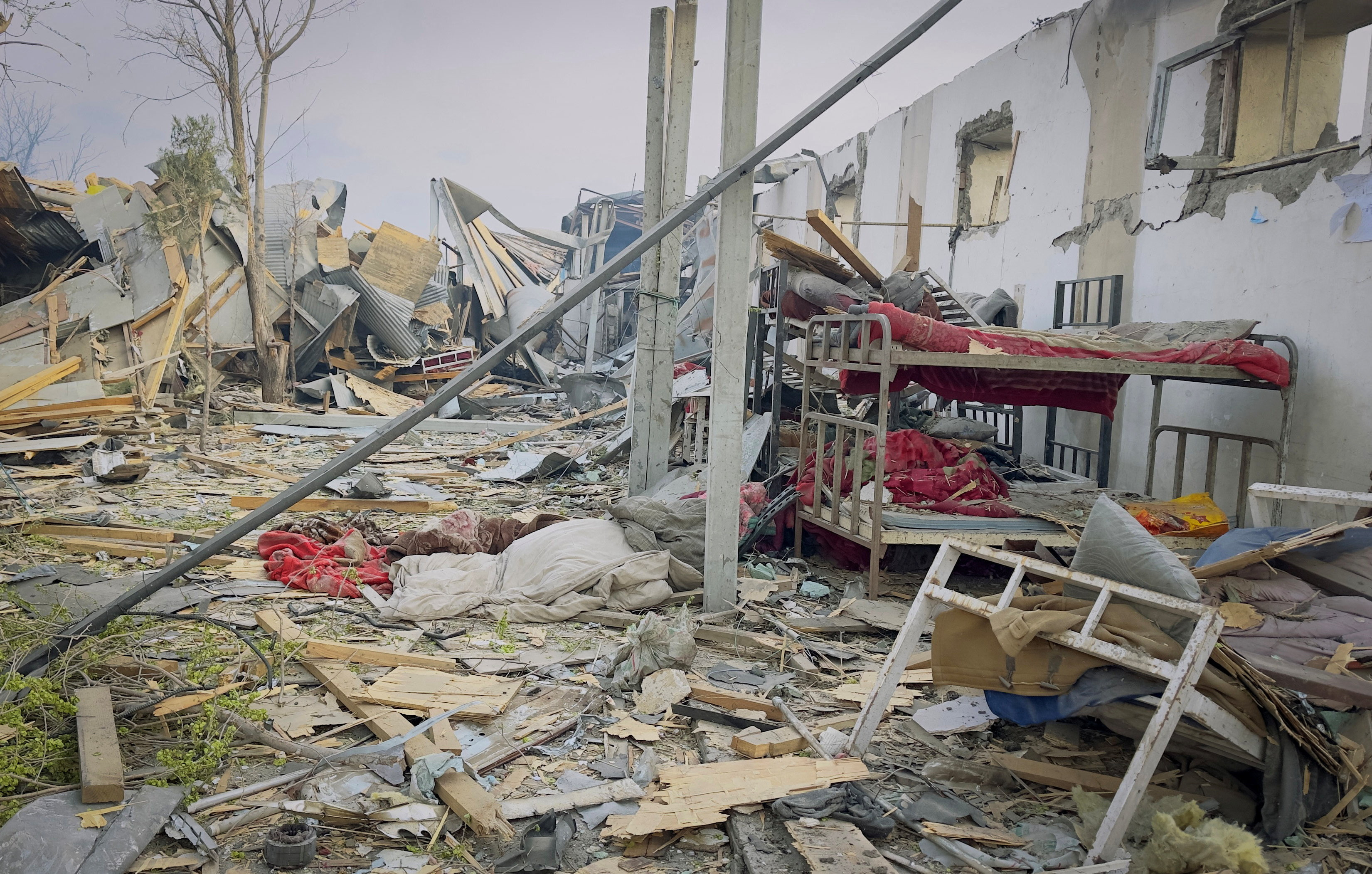
At the site, a blackened single-storey structure bore the marks of flames. In other places, buildings were reduced to heaps of wood and metal, with only a few bunk beds still intact in some, while blankets, personal belongings and bedding were strewn about.
Witnesses said they heard three bombs exploding just as people in the hospital were completing evening prayers and two of them struck rooms and patient areas.
“The whole place caught fire. It was like doomsday,” said Ahmad, 50, who said he was under treatment at the facility and gave only his first name. “My friends were burning in the fire, and we could not save them all.”
Visuals from local media taken overnight showed flames engulfing a single-storey building, while thick smoke billowed from another section of the same complex and workers took away bodies on stretchers.
Ambulances and police vehicles were parked near the gate of the damaged facility, which a sign identified as a “drug addiction treatment hospital” with 1,000 beds, while security personnel maintained guard.
“When I arrived (last night), I saw that everything was burning, people were burning,” ambulance driver Haji Fahim told Reuters. “Early in the morning they called me again and told me to come back because there are still bodies under the rubble.”
‘CONSTANT LIES,’ SAYS PAKISTAN
Hamdullah Fitrat, the deputy spokesman for the Taliban, said the air strike took place at 9 p.m. (1630 GMT) on Monday and targeted the state-run Omid hospital, which he said was a 2,000-bed drug rehabilitation centre.
“Large parts of the hospital have been destroyed, and there are fears of heavy casualties,” he said in a post on X. “Sadly, the number of those killed has so far reached 400, with up to 250 others injured.”
Rescue teams were at the scene working to control the fire and recover the victims, he added, without sharing details of how many bodies had been recovered and how the casualties had been counted.
Reuters could not verify the casualty numbers. Through the conflict, both sides have claimed to have inflicted heavy damage on the other but independent verification has not been possible.
The spokesman for Pakistan’s prime minister called the Afghan reference to drug users being targeted as “constant lies” and said Pakistan’s “counter-terrorism operations” would continue for as long as it took to eliminate “terrorists and their infrastructure”.
Overnight, the Pakistani Information and Broadcasting Ministry said the Afghan Taliban claim was “misreporting of facts”.
“Pakistan’s targeting is precise and carefully undertaken to ensure no collateral damage is inflicted,” it said in a post on X. “This misreporting of facts as drug rehabilitation facility seeks to stir sentiments, covering illegitimate support to cross-border terrorism.”
The Omid hospital was established in 2016 and has treated hundreds of people, also providing them with vocational training such as tailoring and carpentry to make them more employable, according to local media reports.
Fierce fighting between the South Asian neighbours, who were close allies earlier, erupted last month with Pakistani air strikes in Afghanistan that Islamabad said targeted militant strongholds.
Afghanistan called the strikes a violation of its sovereignty that targeted civilians and launched its own attacks.
Islamabad says Kabul provides a safe haven to militants launching attacks on Pakistan. The Taliban deny the allegation, saying tackling militancy is Pakistan’s internal problem.
Richard Bennett, the UN Special Rapporteur for human rights in Afghanistan, said he was “dismayed” by fresh reports of Pakistani air strikes and resulting civilian deaths.
“My condolences. I urge parties to de-escalate, exercise maximum restraint and respect international law, including the protection of civilians and civilian objects such as hospitals,” he said in a post on X.