ANYONE who has spent any elongated period of time in Cyprus will be aware of the spectre of living in or adjacent to an unrecognised country, and the diplomatic, economic, and social consequences which that entails.
In fact, the intractable nature of Cyprus’ political situation has been the main drawer of political, diplomatic, and journalistic eyes to the island for over half a century.
However, while Cyprus is special, it is not unique insofar as that there are other unrecognised states elsewhere in the world, and I decided to visit one of them.
My destination of choice calls itself the ‘Pridnestrovian Moldavian Republic’, or ‘PMR’ for short, and is, according to every single one of the United Nations’ member states, a part of Moldova. To most of the world, it is known as “Transnistria”, but reports I read before my trip suggested that using the T-word while on the territory is punishable by up to 15 days in prison.
The territory lies mostly on the eastern bank of the Dniester river, with (the rest of) Moldova on the other side of that river, and a hard border with Ukraine to its east.
Historically, the eastern bank of the Dniester had a different demographic makeup to the rest of Moldova. While the majority of Moldova is made up of Romanian speakers, ethnic Russians make up the plurality east of the river, with slavs, including Russians, making up the majority.
As such, when the Soviet Union began to disintegrate in the late 1980s and nationalist sentiment stirred in Moldova, with the possibility of union with Romania bandied about, those east of the river balked.
The ‘PMR’ declared independence from the Moldavian Soviet Socialist Republic, the predecessor to the modern Republic of Moldova in 1990, and a bloody war between Moldovan forces and the separatists, who had won the backing of Russia, ensued between 1990 and 1992.
Since then, the Moldovan government has exercised no effective control east of the river.

My journey began with a flight from Larnaca to Chisinau, the capital of Moldova, as while Transnistria does have an airport, neither Moldova nor Ukraine allow their airspace to be used by flights in or out of it, rendering it useless.
In Chisinau, I boarded a Ford Transit minibus headed to Tiraspol, Transnistria’s capital, with this the first major noticeable difference between here and there.
It would be unthinkable for there to be direct public transport links between Famagusta and Larnaca, or between Nicosia’s two sides, but no eyes were batted at the sight of a Tiraspol-bound Transit at Chisinau’s bus station.
The checkpoint at the ceasefire line, too, had its differences. There were no checks on the Moldovan side, with my minibus being waved through to the other side.
There, I and the other nine or ten passengers disembarked and entered a small outbuilding, where our passports were checked. I was handed a small piece of paper, reminiscent of that which used to be handed to non-Turkish Cypriots on the northern side of Cyprus’ Green Line, with my details in Russian typed onto it.
I was dropped off at Tiraspol’s railway station, which used to be a stop on routes to Odesa, but has seen no trains since 2022 on account of Russia’s invasion of Ukraine, and walked towards the city’s hotel, which is called the Hotel Russia.

On the way, I was obliged to visit a bureau de change, thanks to Transnistria’s particular and peculiar monetary system. Card readers and ATMs in the territory can only be used by cards issued in the territory, which also happens to have a currency of its own.
Nothing but that currency will pass muster, either. The Hotel Russia politely declined my offer to pay for my stay in Euros, and when I accidentally handed a woman a 20 Moldovan Lei note while attempting to pay for my lunch one day, she looked at me like I had handed her a lump of excrement.
The currency, known as the ‘PMR Ruble’, can be bought at any of the plethora of bureaux de change inside the territory at a rate of 19 Rubles to the Euro. Rumours of plastic coins seem to be a tourist gimmick, unfortunately, as I never saw one, despite seeing various metal coins and notes in sundry denominations.
However, most of those denominations are small, with even a single Ruble being deemed worthy of a note, leaving me to march around Tiraspol like that Harry Enfield character, most of the time.
Once I had checked into the Hotel Russia, I set off for a walk about town, and found it to be nowhere near as alien as I had thought it would be before setting off.
While the statues of Vladimir Lenin and the flags with hammers and sickles on them are certainly unique, Tiraspol looks and feels recognisable in comparison to other cities in other former Soviet republics I have had the fortune of visiting.

I had, admittedly quite presumptuously, expected Transnistria to be visibly poorer and less economically advanced than anywhere else I had been before, and while a fair proportion of Tiraspol’s apartment blocks have quite clearly seen better days, they were not derelict, and the place was not desolate.
Instead, the city’s wide and straight boulevards lined by brutalist buildings, large green parks featuring amusement parks, and a war memorial bearing an eternal flame are things you can find in Chisinau, or in Tbilisi or Yerevan, which I have also visited in recent months.
Each of those cities, of course, has its own unique edge and character on top of that template. Yerevan has its iconic red stone buildings and now its almost-finished Cascade, Tbilisi has its charming old town and its cable cars, and Chisinau has its bustling market and its artificial lake. Tiraspol, then, has Lenin, hammers, and sickles.
Tiraspol’s own park has flagpoles at both of its extremities, with the two flagpoles at the end farthest from the city centre adorned with the flags of the ‘PMR’ and of the motherland, Russia, while at the other end of the park, the flag of the ‘PMR’ is flanked by the flags of Abkhazia and of South Ossetia – two territories which broke away from Georgia in the 1990s.
Here, the ‘TRNC’ is conspicuous in its absence among the region’s major unrecognised states, though this can be explained by the fact that unlike the other three, it is not backed by Russia.

Noteworthy, too, is the dearth of international brand shops. Tiraspol’s high street, named October 25 Street in honour of the Bolshevik revolution, is lined with shops and cafes, the names of none of which I have ever seen before. Even though Transnistria is not actually a Marxist-Leninist state, just as with northern Cyprus in most cases, the big brands have kept their distance.
I did not even find the practice which was once commonplace in northern Cyprus of large brands either entering the market under pseudonyms, such as Burger King’s “Burger City”, used until 2019, or Vodafone’s ongoing use of “Telsim”, nor did I find any appropriations of international brands, like the “Stargazer” coffee shop which used to exist in the northern Nicosia suburb of Omorphita when I was a teenager.
Instead, any chains I did see are presumed local, with one name appearing more than any other.

If you have heard of Transnistria before, you will have heard of Sheriff. The company, run by billionaire Viktor Gushan, is the driving force behind Transnistria’s economy, and has its finger in most every pie going.
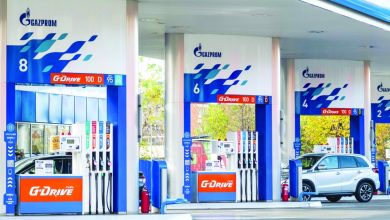
Sheriff owns the territory’s supermarkets and petrol stations, the Kvint winery and distillery, which produces all the local alcohol, and is the majority shareholder in the largest bank, the Agroprombank, though most will best know the name for its football team, Sheriff Tiraspol.
While the division in Cypriot football predates the island’s political division, with Turkish Cypriots having been effectively banned from competing in the Cypriot football league in 1955, teams from Transnistria compete in the Moldovan league, and Sheriff Tiraspol are the league’s dominant force.
They have won a total of 21 league titles since 2001, and even beat footballing royalty Real Madrid at the Santiago Bernabeu in the Champions League in 2021. Their home ground is the impressive Sheriff Arena, which is located on the city’s western outskirts, just off the road which connects it to Transnistria’s second city, Bender.
However, their footballing story is not without political let and hindrance, as since the outbreak of the Ukraine war, they have been forced to play their European home games, including a glamour tie with Manchester United in the Europa League in 2022, at Chisinau’s Zimbrul Stadium, rather than in Transnistria.
Away from football, the road connecting Tiraspol and Bender is somewhat eye-catching as it is entirely covered by electric wires, with Transnistria’s largest two conurbations connected by a regular trolleybus service.
I decided to see Bender for myself and boarded a trolleybus, only to find that payments these days for trolleybus services are card only. Realising the predicament in which I found myself, the rather sympathetic conductor appealed to my fellow travellers for someone to scan their card twice and receive a proportion of my wad of cash.
A lady in a bright yellow overcoat obliged, and then inadvertently did me the secondary favour of relieving me of some of my PMR Rubles.

Bender is technically located on the “other” side of the Dniester, and while the checkpoint is west of the town itself, the bridge over the river into the town was manned by a single Russian soldier stood behind sandbags and holding a Kalashnikov, who watched our trolleybus pass and then got on with his day.
My arrival in Bender was greeted by the sound of five or six rather distant explosions, which I presumed at the time were something to do with the Ukraine war, though about which I was unable to find any news reports.
Explosions aside, Bender is a rather unremarkable former Soviet town. It has its own Lenin statue and its own park, though it has no amusement park, while its main attraction is a place called the “USSR Canteen”.
Bender’s “USSR Canteen” and Tiraspol’s “Back in the USSR” restaurant are birds of a feather, with the main difference being that at the former, you have to get up and point at things to get served, and at the latter, you get table service.
Both locations are decked out in Soviet paraphernalia, with flags on the walls, nicknacks all around, and the workers wearing uniforms which border on fancy dress, though the illusion in Bender is slightly broken by the flat screen television on the establishment’s back wall which displayed library footage of Dubai.
The grub on offer at both places is unsophisticated but filling, somewhere between bland and flavourful, a mystery meat combined with an unmistakeable vegetable. In Tiraspol, two patties, in Bender, a large sausage. In Tiraspol, mashed potato, in Bender, cabbage leaves stuffed with rice and dolloped with what I believe to be sour cream. Sustenance.

I would call both places a gimmick, but the commitment extends to 1980s pricing. My meals, which in both cases included a bottle of water, cost 67 PMR Rubles (€3.53) in Bender and 79 PMR Rubles (€4.16) in Tiraspol. Bottled water, by the way, is in most cases imported from Italy, which I find to bring a little class to proceedings.
While the food in both USSR-based establishments was unspectacular, I do believe there is at least one culinary lesson Cyprus can take from Transnistria, and one which I found at a bus stop bakery: a shish kebab, or souvlaki, caked in pastry.
In terms of ease of eating, the fact that the wooden skewer was still attached to the meat, and thus the pastry, and the consequence that my slightly numb hands in freezing temperatures were forced to grapple with it, was suboptimal, but the idea? The concept? Exquisite, revolutionary, and frankly unbelievable that in the 14,000 years of human inhabitation in Cyprus, it has never been tried here.

Holidaying in Transnistria, therefore, is fun and slightly absurd, and I lament to report that I have little to offer in terms of insight into what the natives themselves think about living there, as very few people speak English, and I know not a word of Russian.
The best command of the English language I experienced was from a lady called Maria, who was working at the reception of the Hotel Russia when I arrived, and told me that “we had never heard of the country you put on your booking form” and that the hotel had initially assumed I had made a nuisance booking.
I did meet one other English speaker – a club promoter called Aleksandar – in a cafe, and when I asked him what life is like in Transnistria, he sucked his teeth, looked around the cafe, and said, “difficult”.
Asked to expand, he said there is “no money” in the territory, and internationally available statistics back that up. Regional media reports from last summer suggest that the average monthly salary is 7,600 PMR Rubles (€400) per month.
This lack of money has led many young people from the territory to seek professional opportunities elsewhere, with academics speaking of a “brain drain” and something of an exodus of young people – an issue shared by northern Cyprus, as highlighted by Tufan Erhurman during his successful 2025 Turkish Cypriot leadership election campaign.
Anecdotally, while it would be unfair to say I noticed a dearth of young adults while in Transnistria, the majority of people I did see were either elderly or children.
In addition, an electric advertising screen on October 25 Street had among its set of adverts an offer of migration services, with the promise of jobs at automobile factories in Germany and the Czech Republic, complete with stated salaries upwards of €1,800 per month.

The ‘PMR’, like the ‘TRNC’, issues its own passport, and like that of the ‘TRNC’, it does not get its holders very far. Most people in Transnistria also hold citizenship of Moldova, Ukraine, Russia, or all three, and use those passports to travel and to migrate.
Travel for the people of Transnistria has become somewhat easier in relatively recent years, however, with the introduction of something of a confidence-building measure for motorists in 2018.
While the Transnistrian authorities issue their own vehicle registration plates, which feature a flag of the ‘PMR’ on their left-hand side, for the past eight years, motorists in Transnistria have been given the option of instead acquiring a “neutral” registration plate, issued by the Republic of Moldova.
The “neutral” plate resembles the Moldovan plate in format, but is devoid of any of the national demarcations visible on regular Moldovan plates, such as the country’s flag or the “MD” abbreviation. Crucially, Transnistrian vehicles bearing “neutral” plates can be driven westwards out of Moldova and into the European Union.
Registration plates on vehicles, namely those being driven through Tiraspol on any given day, also provide evidence of something of a growing tourism industry in Transnistria.
On my walks through Tiraspol, in addition to ‘PMR’, “neutral”, and Moldovan registration plates, I also saw plates belonging to Ukraine, Russia, all three Baltic states, Italy, the Netherlands, and a great number from Poland. I even saw a Mini Cooper on British plates parked outside of a branch of the Agroprombank one morning.
Some of those vehicles, of course, will belong to natives who have migrated outwards and are returning on holiday, but a cursory internet search for Transnistria will offer evidence that people from far and wide are visiting the territory to see for themselves the Lenin statues, the hammers, and the sickles – just as busloads of European tourists line up at Nicosia’s Ledra Street crossing point every summer.

It is this juxtaposition, this contradiction, which unites northern Cyprus and Transnistria. Both are officially, and in various ways practically, internationally isolated, and yet it is the status of both as a curiosity which draws international eyes to them.
However, beyond that, there is little spectacular to report. Transnistria is distinct, but it is not alien.
Behind the noise of the Lenin statues, the hammers, the sickles, and the USSR-themed eateries, Europe’s “other” unrecognised country is, like the unrecognised country we have at home, a place like any other, where a few hundred thousand largely ordinary people attempt to go about their lives against the backdrop of a set of circumstances bequeathed unto them by geopolitics.