BEIRUT: Israel expanded its air strikes in Lebanon on Wednesday, targeting the area around the presidential palace near Beirut and other areas south of the capital as well as strongholds of the Lebanese group Hezbollah, killing at least 11 people. Lebanon was drawn into the Middle East war on Monday when Hezbollah attacked Israel in response to the killing of Iranian supreme leader Ayatollah Ali Khamenei during US-Israeli strikes over the weekend.
An air strike hit a hotel in Hazmieh on Wednesday, the first reported Israeli attack on the predominantly Christian area in Beirut’s suburbs near the presidential palace and several embassies. Some rooms were gutted in the strike, while wounded people received treatment in the lobby. People also fled through debris, carrying suitcases past the Comfort Hotel’s sign, which had fallen broken to the ground. It was not possible to determine who was targeted in the attack.
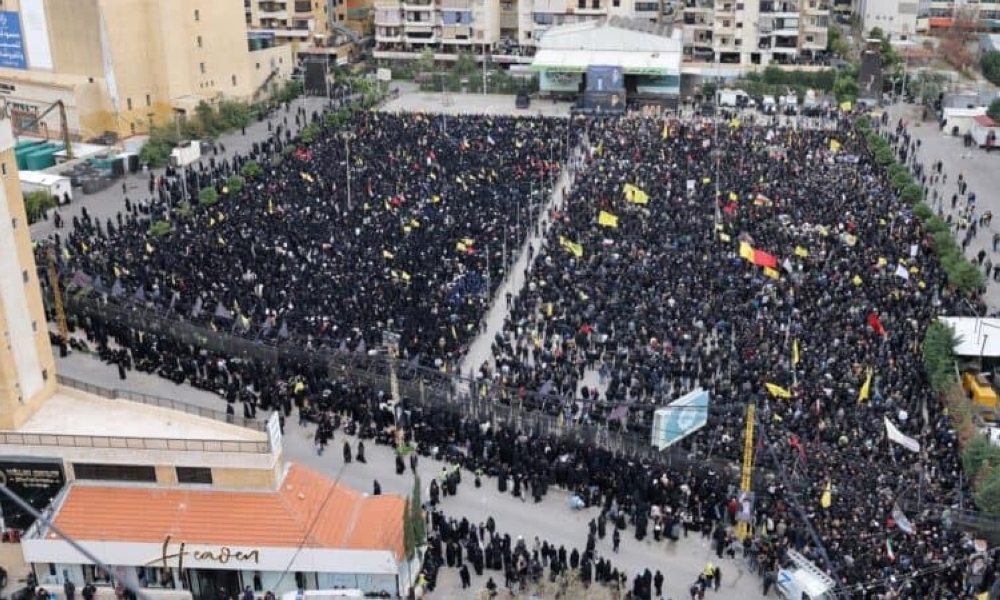
The southern suburbs of Beirut, a Hezbollah stronghold, were targeted again on Wednesday morning, following an evacuation order from Israel’s military. Smoke rose over the densely populated area, where some residents fled when the violence erupted. In Aramoun and Saadiyat south of Beirut — two towns outside Hezbollah’s traditional strongholds — the health ministry said Israeli strikes killed six people and wounded eight others. It cautioned that this was a “preliminary toll”.
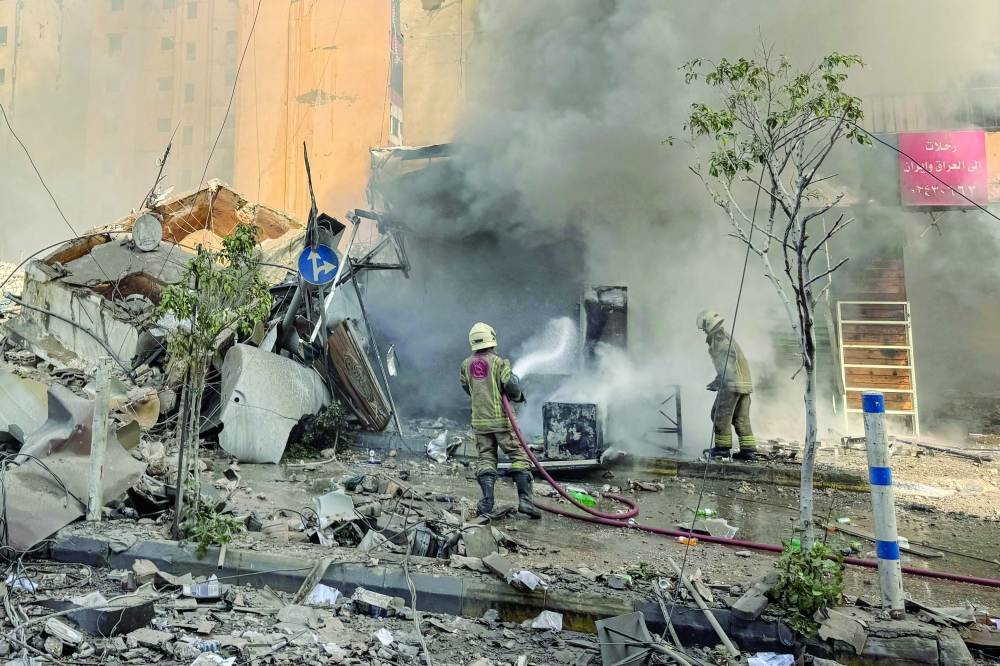
Firefighters extinguish a fire at the site of an Israeli air strike in the southern suburbs. — AFP
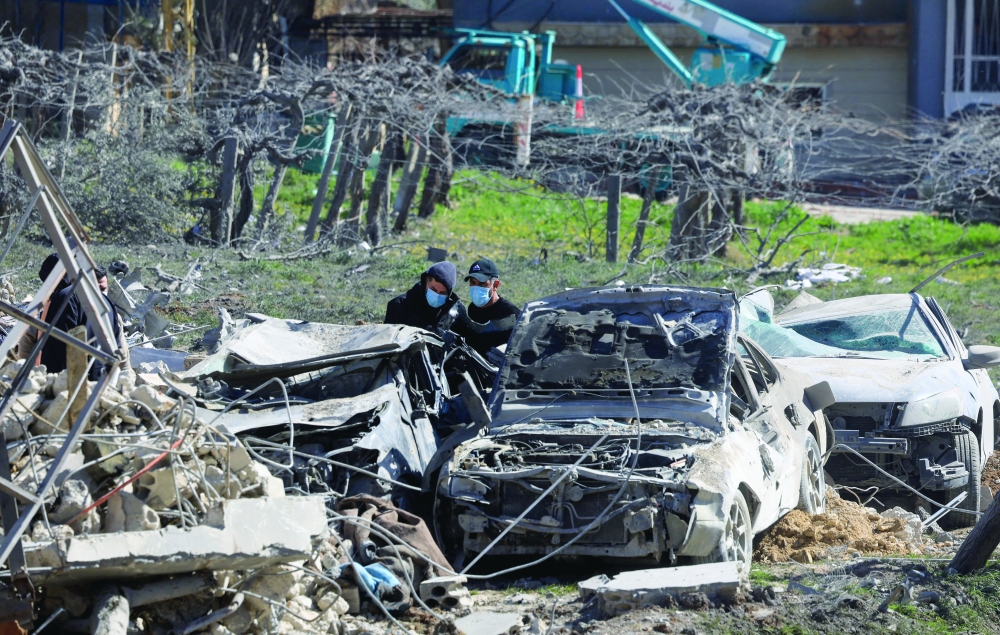
Footage from Aramoun showed damaged cars and rescue workers carrying a wounded person on a stretcher. Strikes also targeted a four-storey building in the city of Baalbek, in Lebanon’s east far from the border where Hezbollah also has a strong presence. Five people were killed, 15 were wounded and three remain missing, Lebanon’s state-run National News Agency reported. One side of the building collapsed. AFP correspondents saw rescue workers searching through the rubble for survivors.
The Israeli military called on people to “immediately” leave 13 towns and villages in southern Lebanon on Wednesday morning ahead of strikes against Hezbollah, the military’s Arabic-language spokesman Avichay Adraee said on X. A similar evacuation warning had earlier been issued for 16 other southern towns and villages. Hezbollah carried out a series of strikes against Israel on Tuesday, claiming to have targeted sites including the northern Haifa naval base in retaliation for Israeli strikes in southern Beirut.
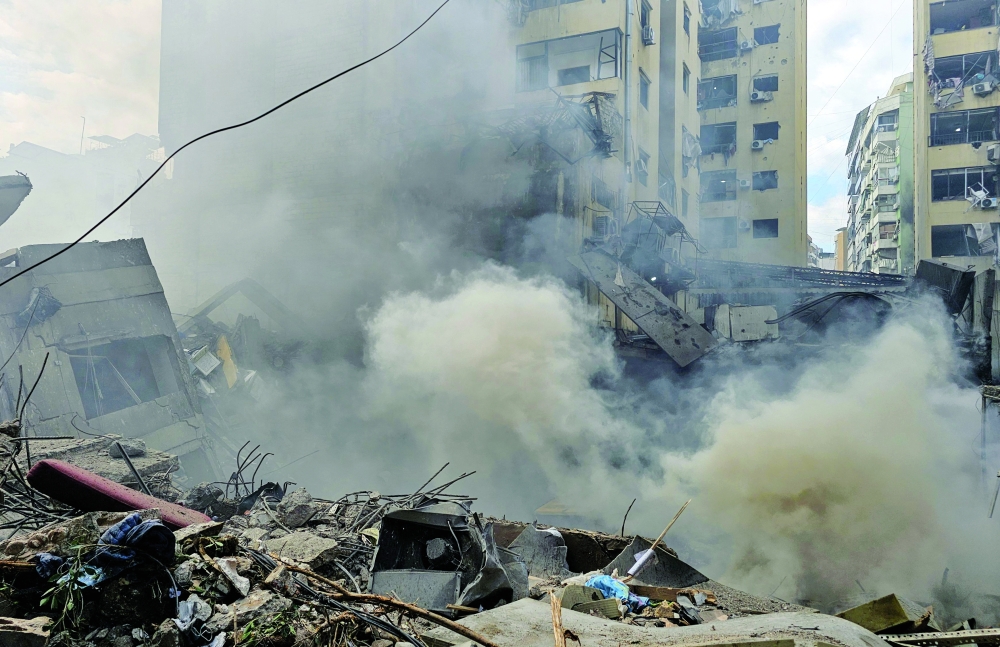
Smoke billows from the site of an Israeli air strike, in Beirut. — AFP
Hezbollah said on Wednesday it had struck two Israeli military vehicles in the southern Lebanese village of Houla, as Israel’s army reportedly advances over the border. In a statement, Hezbollah said it struck an armoured personnel carrier in Houla with “appropriate weapons, achieving a direct hit”. In a separate statement, Hezbollah said it had also struck a Merkava tank in Houla, “achieving a direct hit”.
Since Monday, Israeli strikes have killed at least 50 people and wounded 335 in Lebanon, the health ministry said before the overnight strikes. World Health Organization chief Tedros Adhanom Ghebreyesus said three paramedics were killed and six injured “while recovering people injured by explosions” in Lebanon’s southern Tyre district. “Warring parties must abide by international humanitarian law and protect health workers, facilities and patients,” he said on X. Lebanese authorities on Monday recorded the displacement of more than 58,000 people from areas targeted by strikes. The Israeli military has said it will continue to strike Hezbollah until the Lebanese group disarms. Israeli forces also launched a ground incursion on Tuesday, advancing into a border area in southern Lebanon, a Lebanese army source said.
Lebanese state media also reported that the Israeli army had entered the southern Lebanese town of Khiam, about six kilometres from the border, marking its deepest entry since the fighting broke out. The report comes a day after Israel’s military said it was creating a buffer zone inside Lebanon to protect Israeli residents. When asked, the Israeli military said it cannot disclose the locations of its troops. — AFP