TEHRAN: Loud explosions shook Tehran on Tuesday after a night of bombing, as US President Donald Trump pressed allies to help in the war that has engulfed the Middle East and sparked global economic turmoil. Oil prices rose more than five per cent on Tuesday after several countries pushed back on Trump’s demand they help protect shipping in the Strait of Hormuz, a waterway that is key to the transit of crude and liquefied natural gas. The war, now in its third week, has killed hundreds and seen Iran launch retaliatory strikes against Israel and Gulf nations, as well as a front opening in Lebanon with Israel battling Hezbollah. Iraq, long a proxy battleground between the United States and Iran, has also been drawn in, with a drone and rocket attack targeting the US embassy in Baghdad on Tuesday.
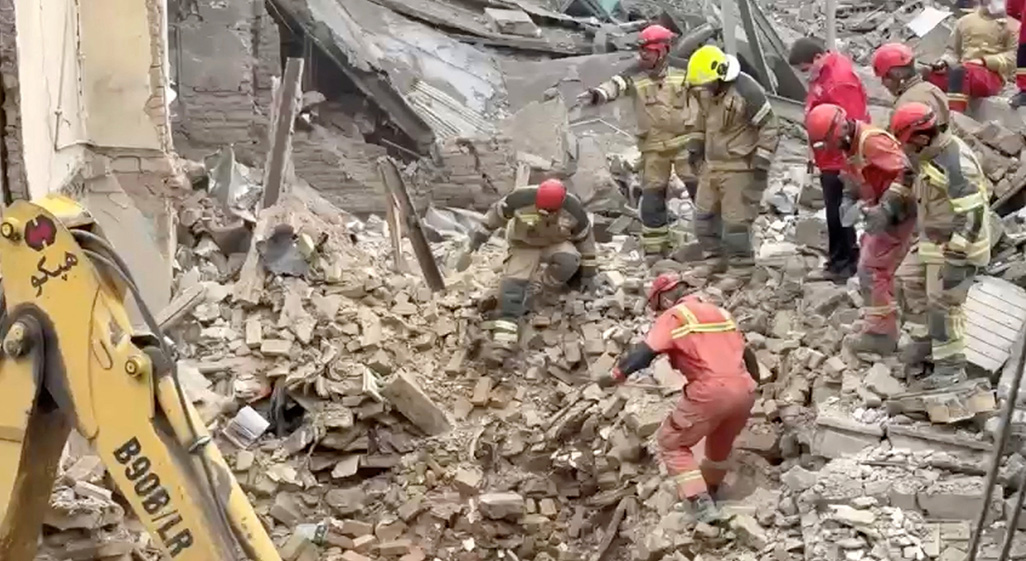
Blasts were heard in Iran’s capital Tehran, a journalist said, after a night of heavy bombardment mixed with thunder and rain. It was not immediate clear what the targets were, but Israel’s army said earlier it had launched a wave of strikes “against Iranian terror regime infrastructure across Tehran”, as well as strikes in Lebanon. Lebanese state media reported on Tuesday that Israeli strikes at dawn hit a residential building in Beirut’s southern suburbs, a stronghold of the group Hezbollah. A photographer saw firefighters tackling a blaze at the site of a strike, while rubble and debris were strewn across the road.
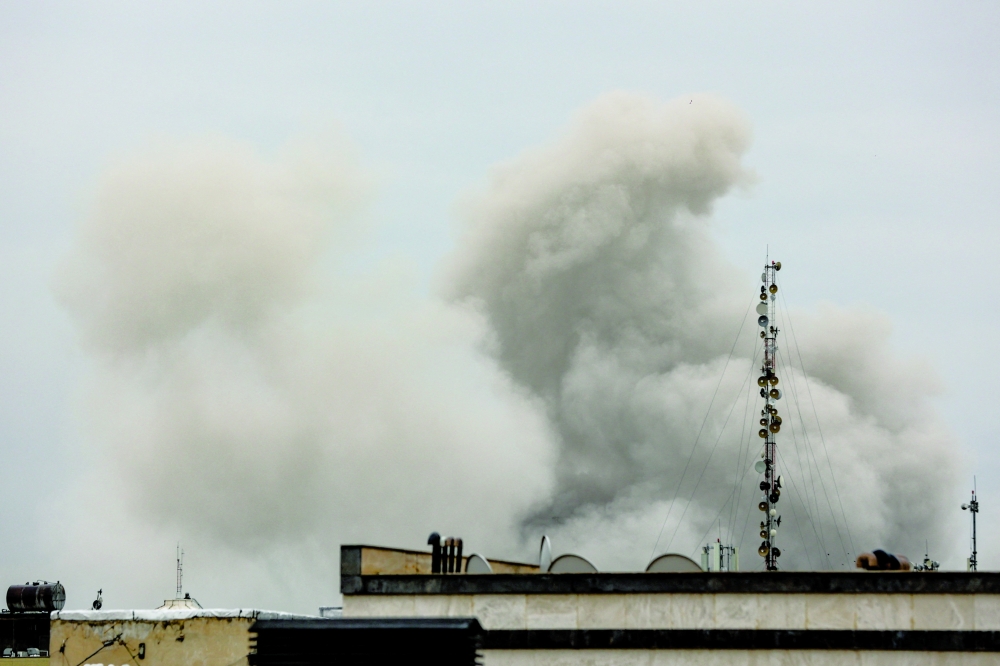
Smoke rises following a strike, amid the US-Israeli conflict with Iran, in Tehran. — Reuters
TRUMP HORMUZ CALL
On Monday, Trump demanded US allies join quickly and with “great enthusiasm” an armada to escort tankers through the strait. He has warned that it would be “very bad” for the future of the Nato military alliance if the allies refused to help. British Prime Minister Keir Starmer said London was working with allies to craft a “viable” plan to reopen the strait, but ruled out a Nato mission. Berlin also said it “has been clear at all times that this war is not a matter for Nato”. Japan, Australia, Poland, Spain, Greece and Sweden also distanced themselves from any military involvement in the Strait of Hormuz. EU foreign ministers discussed the war in Brussels on Monday but showed “no appetite” for extending their Red Sea naval mission to help reopen Hormuz, the bloc’s top diplomat said.
Analysts said it was not surprising that America’s partners were unenthusiastic about joining a war they were not consulted on, after a year of tensions with Washington on everything from tariffs to Greenland. The United States had “launched a war without consulting allies, expecting them to mop up the mess, and that’s not going fly”, said Erwan Lagadec of George Washington University’s Elliott School of International Affairs.
DEFIANT TONE
Trump on Monday admitted he was “shocked” at Iran’s response to the US-Israel attacks. “They weren’t supposed to go after all these other countries in the Middle East. Those missiles were set to go after them,” he said. “So, they hit Qatar, Saudi Arabia, UAE, Bahrain, Kuwait. Nobody expected that. We were shocked.”
More than 1,200 Iranians have been killed by US and Israeli strikes, according to the last toll from Iran’s health ministry on March 8, which could not be independently verified. But Iran’s foreign minister struck a defiant tone on Monday. “By now they have… understood what kind of nation they are dealing with,” Abbas Araghchi told reporters in Tehran. Iran, he said, “does not hesitate to defend itself and is ready to continue the war wherever it may lead, and take it as far as necessary”.
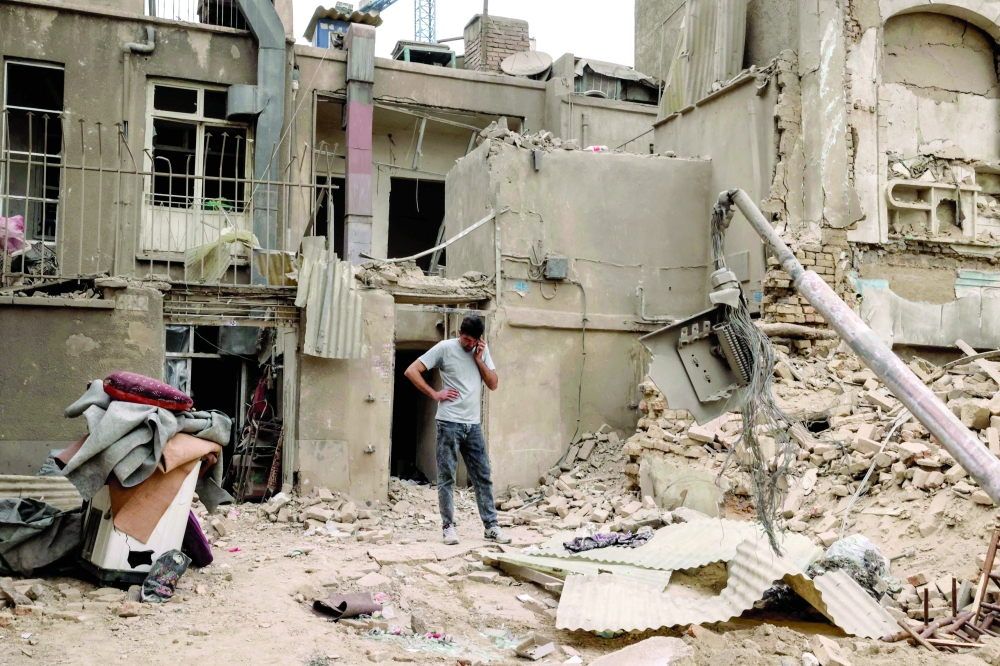
A man speaks on a mobile phone as he stands outside damaged homes, in Tehran. — AFP
RESIDENTS FLEE NORTH
No explosions, few police checks and well-stocked shops: in the relaxed Caspian Sea resorts where many Tehran residents have fled, the ongoing war seems far away. “It seems as though people barely realise that there’s a war happening,” said an Iranian woman in her thirties, who decamped there from the capital. “Or they are not paying much attention to it,” added the woman on condition of anonymity. She was speaking from Babolsar, one of the towns on the Caspian Sea coast known as Iran’s “Riviera” due to its beaches and more laid-back atmosphere than the big cities.
Located around 200 kilometres (125 miles) north of the capital beyond the Alborz mountains, the Caspian coast is a popular destination for Tehran residents, who flock there in normal times for weekends and holidays. It has cooler weather than Tehran in the stifling summer months, as well as looser enforcement of religious rules on alcohol and extra-marital relationships, contributing to its appeal and hedonistic reputation. — AFP